File 005 GRY // Gray Man & OPSEC
The Gray Man Strategy: 9 Rules, the Science and Where It Fails
The gray man strategy means blending in so you are not picked as a target in a crisis. Nine rules, the attention science behind them, and its limits.
Lab verdict
The gray man strategy is blending into your surroundings so nobody picks you out as a target during a crisis. It works by matching local clothing, gear and behavior, and by not advertising supplies. The evidence is indirect, and it fails where everyone already knows you.
Key findings
- Gray man means looking unremarkable for your location. It is not invisibility and not deception of authorities.
- Research on attention shows people notice what is relevant or different, and miss much of the rest. Crime research shows offenders respond to visible wealth, occupancy cues and ease of escape.
- Behavior gives you away more than clothing. A 1981 study found inmates rated pedestrians’ vulnerability from how they walked.
- No study has tested the strategy in a disaster. Disaster research also shows most people help each other, so blending in should not mean avoiding everyone.
MythWearing tactical gear makes you safer.
EvidenceTactical clothing and branded gear make you stand out in a normal neighborhood. Robbery research found outward signs of wealth were important in choosing targets.
MythIn a disaster, everyone turns on each other, so hide from everyone.
EvidenceDisaster researchers have found helpful behavior dominates the emergency period, and Hurricane Katrina looting reports were exaggerated by news coverage. Mutual aid beats isolation.
The gray man strategy is simple to state. In a crisis, you try to look like everyone else so nobody sees a reason to pick you. No camouflage, no logos, no pile of gear on your back, no lights on at the wrong time.
The idea sells well on survival channels. We checked what it rests on. The attention research is solid. The crime research gives a reasonable footing. But nobody has tested the strategy itself in a real disaster, and we will say where that leaves the claims.
What the gray man strategy actually is
It is a set of habits to lower your visibility to people who might want what you have. That covers clothes, bags, behavior, noise, light, trash and your online footprint.
It is not a way to hide from police, soldiers or officials. Blending in means not drawing attention from strangers. It does not mean lying to authorities, dodging checkpoints or hiding things you are legally required to show. If a uniformed officer asks you something, you answer honestly. That is also the safe thing to do.
Why blending in works: attention
The first leg is human attention. In the classic experiment by Simons and Chabris, published in Perception in 1999, observers counted ball passes in a video. Many failed to notice an unexpected event in the scene. The authors concluded that we perceive and remember only the objects and details that receive focused attention. Whether people noticed depended on how similar the unexpected object was to the things they were watching and on how demanding the task was. Spatial closeness did not seem to matter.
Do not stretch that result. It shows how selective attention is. It does not prove a stranger will miss you if you wear a gray jacket. What it supports is narrower and still useful: people monitor for what is relevant and what differs from the usual pattern. If you match the pattern, you give a passing stranger less to latch on to.
The second leg is how offenders choose. Researchers who interviewed robbers found that outward signs of wealth were important in choosing some targets, and that hiding places and access for escape were paramount. A study of 50 experienced burglars by Nee and Meenaghan, in the British Journal of Criminology and summarized by the British Psychological Society, found a fairly stereotyped set of checks before picking a house, including wealth, occupancy, access and security. (We read the abstracts and a summary, not the full papers.)
Together: offenders go by cues, they take the easy option, and they dislike risk. Cues of wealth and cues of an easy score both help them choose. You can control some of those cues. You cannot control all of them.
The nine rules
1. Dress for the local baseline
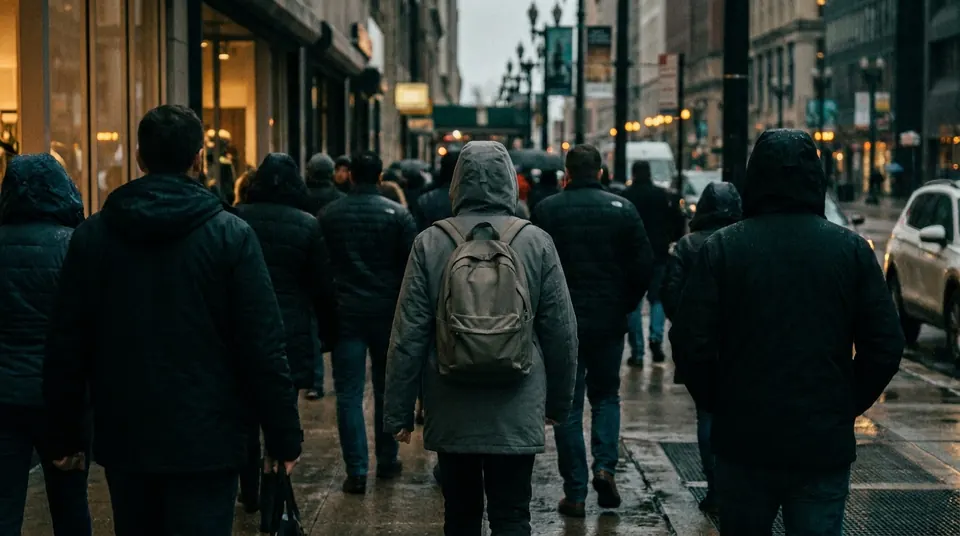
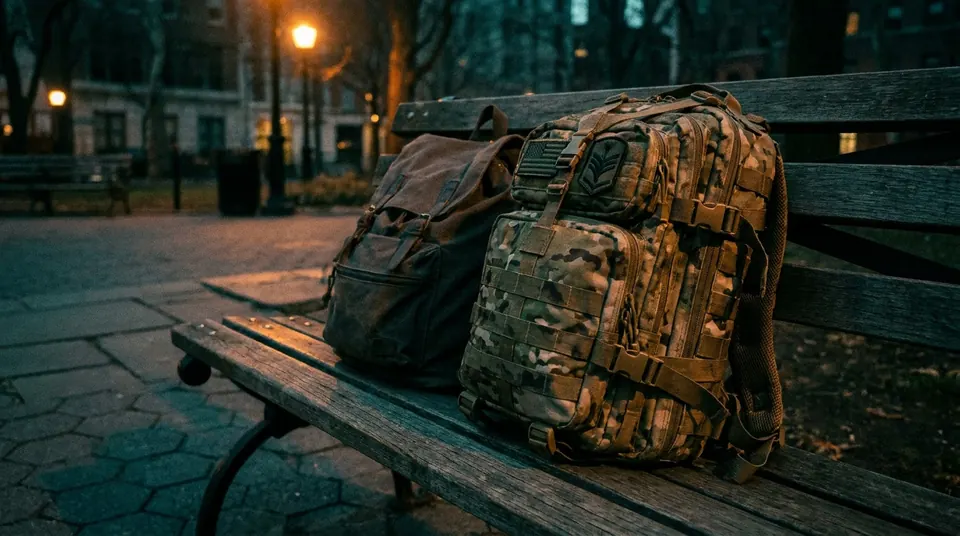
Look at what people wear where you are: work jackets, office wear, hoodies, hi-vis. Match it. Skip camo, plate carriers, military surplus, loud brands and anything with a patch. Pick plain, muted colors that fit the place. A tactical vest in a suburb says “I have something worth taking.” Neutral is not always gray. In a farm town it is canvas and boots. Our gray man clothing guide goes item by item.
2. Carry a neutral bag
A black tactical backpack covered in webbing signals contents. An ordinary school-style or work bag does not. Put the useful gear inside and keep the outside boring. Our survival gear list covers what is worth carrying. The point here is how it looks.
3. Behavior over clothes
This is the rule most prepper content skips. In a 1981 study, Grayson and Stein filmed people walking on a New York sidewalk and showed the footage to inmates in a prison, who rated how easy each person would be to attack. Sex, race and age did not explain the choices. Several body-language signals did, such as stride, pace and posture. Later work by Gunns and colleagues (2002) noted that raters might have used other visual features, so the finding is suggestive, not settled. We read secondary accounts, not the 1981 paper.
What to do with it: walk with a steady pace, look up, scan the area, and keep your movement smooth and purposeful. Not stiff or aggressive. Calm and aware.
4. Do not advertise your supplies
Lights at night when the block is dark. A generator that runs for hours. Bags of packaging in the trash. A garage full of water drums with the door open. Each is a signal that your house has what others lack. Run noise-making gear sparingly and in short bursts. Keep trash bland. Close curtains. Keep deliveries and loading low-key. This lines up with what the burglar research found: they check for wealth and occupancy first.
In a long outage, the visible differences between homes grow quickly. Our guide on what happens if the power grid goes down covers what fails and when, and it is worth knowing which of your signals will stand out.
5. Go gray online
Posting your prep, your stock, your address or your location tells the world what you hold. Turn off location tags. Do not post gear shots with identifiable backgrounds. Do not brag in local groups. People who know you prepare can tell others, and in a crisis they will remember who to ask. We found no study measuring this effect, so treat it as common sense. The five-step OPSEC process for preppers turns this into a household checklist.
6. Know the baseline of your area
You cannot blend in without knowing what normal looks like: who is on the street at 7 a.m., what people carry, what the noise level is, which cars belong. Walk the neighborhood now. Notice what changes in a crisis: more foot traffic, closed shops, new patrols. If you do not know the baseline, you cannot tell when something has shifted.
7. Have a plausible reason to be where you are
Walking with a purpose draws less attention than loitering. Carrying water to a friend, going to work or checking on a relative is a normal reason to be out. Have a simple, true answer for why you are somewhere. Do not invent a cover story for an official. A real purpose is easier to hold up than a fake one.
8. Travel at ordinary times
Moving when everyone else moves keeps you in the crowd. A lone figure at 3 a.m. stands out even in normal times. If you have to move at odd hours, do it with a reason and with other people.
9. Keep a little cash, out of sight
Card readers and ATMs depend on power and networks. In an outage, small bills may matter. Keep it split between pockets and bags. Do not flash a thick roll. The visible-wealth finding applies to cash too.
Note: None of these rules is a guarantee. They shift odds. They do not change what you have, who knows about it or whether someone is determined to find you.
What the gray man cannot do
It does not work where everybody knows you
In a small town or a building where neighbors know you, there is no baseline to blend into. They know you are the person with the garden, the radio and the well-stocked pantry. Your gear is already visible. Blending in works best among strangers, such as when traveling, when evacuating or when in a big city. Where people know you, your reputation matters more than your jacket.
It is not a substitute for community
The popular view of disaster is that people turn on each other. Disaster researchers say otherwise. A paper by E. L. Quarantelli of the Disaster Research Center said panic flight is rare and that prosocial behavior outweighs antisocial behavior in the emergency period. A 2006 paper by Tierney, Bevc and Kuligowski argued that media coverage after Hurricane Katrina greatly exaggerated the extent and severity of looting and lawlessness. A 2024 review in Frontiers in Public Health judged looting depictions overstated but also documented real misconduct such as fraud. We could not open the full texts, so we rely on those summaries.
That has two consequences. First, if you hide from everyone, you lose the help neighbors can give, from medical aid to information. Second, fear of looting can push people to avoid evacuating. The gray man approach is meant to be selective: low profile to strangers, strong ties to people you trust. Mutual aid beats hiding, and real breakdowns back that up (see where to hide when society collapses).
It can make you too invisible
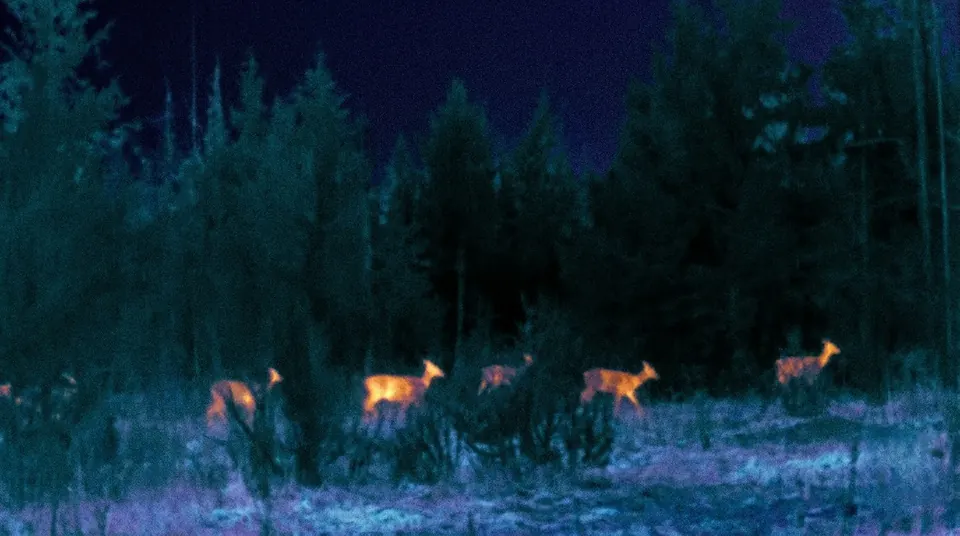
If you need help, you must be seen. A hurt person who blends in with the background may not be found. Our piece on hiding from thermal imaging makes the same point from the search-and-rescue side. If you are lost, injured or stranded, be visible.
It is not tested
We found no controlled study showing that gray man habits lower the chance of being targeted in a disaster. What we have is basic attention research, offender-interview studies and a gait study with limits. The logic is plausible. The proof is indirect. Take it as risk reduction, not a shield.
Ethics: blending in is not deceiving
The line is clear. It is fine to dress plainly, keep your voice down and not show off your stock. It is not fine to impersonate an officer, forge papers, lie to authorities, or use cover to hide a crime. A gray man who is a lawful, careful resident is a good neighbor. One who uses the concept to evade lawful orders is something else.
Lab verdict
- Gray man means matching your surroundings and not signaling that you hold something valuable.
- Attention research and offender studies support the logic, but no study has tested the strategy in a disaster.
- Behavior, signals and information leaks matter more than which jacket you wear.
- It works best among strangers. It does little where you are known.
- Keep your ties to trusted neighbors. Do not hide from help.
Frequently asked questions
What is the gray man concept?
It is the habit of blending into your surroundings so you are not singled out. In prepper circles it applies to crises: dress and act like the locals, avoid logos and tactical gear, and do not advertise what you have. The aim is to be forgettable to strangers, not to deceive officials.
How do you become a gray man?
Start with the baseline: what people in your area wear, carry and do. Match it. Use neutral bags, keep lights and noise low, keep your online posts quiet, walk calmly and travel at normal times. Behavior matters as much as clothes. A calm, aware walk draws less attention than flashy gear.
What is gray man clothing?
Plain, muted clothes that match local dress. Skip camo, military surplus, patches, plate carriers and loud logos. In a city, that may be a plain jacket and jeans. In a rural area, it may be a work coat and boots. The rule is local normal, not a particular color.
Does the gray man strategy actually work?
The supporting science is indirect. Attention research shows people miss much of what does not match their focus, and offender studies show wealth and occupancy cues matter in target choice. We found no study that tested gray man habits in a real disaster, so treat it as a way to reduce risk, not remove it.
Is the gray man strategy legal and ethical?
Blending in is legal. Dressing plainly and not showing off your supplies is just discretion. It stops being ethical when it becomes lying to authorities, impersonation or hiding wrongdoing. Always answer officials honestly and follow lawful instructions.
Sources
- Simons and Chabris, Gorillas in our midst: sustained inattentional blindness for dynamic events, Perception 1999
- NCJRS abstract: Robbers on Robbery (Wright and Decker)
- NCJRS abstract: Expert Decision Making in Burglars (Nee and Meenaghan, 2006)
- British Psychological Society Research Digest: The expert mind of the burglar
- Gunns et al., Victim selection and kinematics (2002), discussing Grayson and Stein (1981)
- Tierney, Bevc and Kuligowski, Hurricane Katrina media framing and disaster myths, The ANNALS 2006
- Frontiers in Public Health 2024 review on looting depictions
General information, not medical or professional advice. In a real emergency, follow instructions from officials and call 911. Disclaimer.