File 006 SCI // Survival Science
Can You Use a Propane Heater Indoors? What the CO Data Says
Only propane heaters labelled for indoor use, with an oxygen sensor, tip-over shutoff and a CO alarm, are acceptable. Here is the chemistry and the rules.
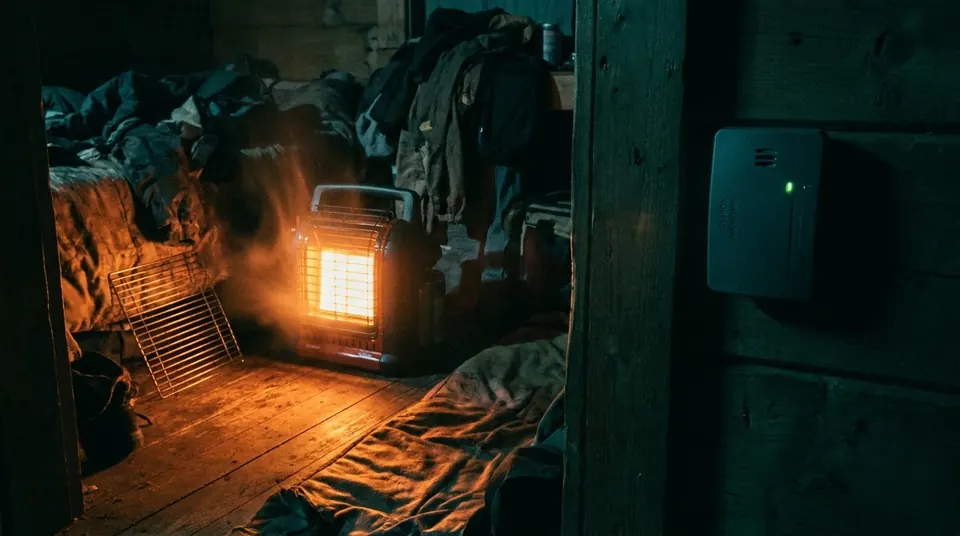
Lab verdict
Yes, but only a propane heater that is specifically labelled for indoor use, with an oxygen depletion sensor and tip-over shutoff, used exactly as its manual says and with a working carbon monoxide alarm. Patio heaters, torpedo heaters, grills, camp stoves and ovens are never indoor heaters.
Key findings
- CPSC says propane heaters without an oxygen depletion sensor are outdoor-only and must never be used indoors.
- Carbon monoxide is odorless. You cannot smell it, so a CO alarm is the only warning.
- Cracking a window is not a substitute for the ventilation your heater’s manual specifies.
- Keep any heater at least 3 feet (0.9 m) from anything that burns, and never run one while you sleep in a tent or other small enclosure.
- Kerosene heaters need K-1 kerosene only, and some states and cities restrict or ban them.
MythOpening a window a crack makes any propane heater safe.
EvidenceVentilation is a manufacturer specification, not a guess. Heaters without an oxygen depletion sensor are outdoor-only whatever the window does, and CPSC says open windows do not make generator exhaust safe either.
MythYou would smell it if the heater was making carbon monoxide.
EvidenceCO is odorless and colorless. Mr. Heater’s own manuals call it an odorless, poisonous gas. A fuel smell signals a leak, not CO from a burner that is running.
A propane heater can be used indoors, but only if it is built and labelled for that. A small radiant unit with an oxygen depletion sensor (ODS), a tip-over switch and a clear indoor-use rating is the category the U.S. Consumer Product Safety Commission (CPSC) accepts. Anything else is an outdoor tool, and bringing it inside is how people die in power cuts.
The risk is not the flame. It is the exhaust. A heater with no chimney puts everything it burns into your room, and one of those byproducts is a gas you cannot detect without an instrument.
This page explains what “indoor safe” actually means, why carbon monoxide (CO) is the real threat, which heaters never belong inside, and how to run a compliant one if the grid is down. If you are planning for an outage, read it alongside our guide on what happens if the power grid goes down.
What “indoor safe” propane heater means
Two safety devices separate an indoor-rated radiant heater from the rest.
The oxygen depletion sensor watches the air around the burner. If oxygen falls, it closes the gas valve before the flame starts making large amounts of CO. CPSC describes the sensor as shutting the heater off when oxygen drops below 18 percent, and says heaters without one are intended for outdoor use only and “must never be used indoors” (CPSC). Normal air is about 21 percent oxygen, so 18 percent is a small margin.
The tip-over switch cuts gas if the heater is knocked down. That matters for fire, not CO.
Look for explicit wording on the box and the heater: “indoor safe” or “for indoor use,” an oxygen-sensing or low-oxygen shutoff label, and a recognized test mark. CPSC points to CSA marks on compliant portable heaters. Mr. Heater’s Buddy line is the best-known example. Its product pages list an automatic low-oxygen shutoff and tip-over shutoff, and the Big Buddy page gives an enclosed-space rating of up to 450 square feet and a maximum elevation of 7,000 feet (2,130 m) (Mr. Heater). Those are one manufacturer’s figures for one model. Your own manual overrides anything you read here.
Safety: The sensor is a backstop, not a license to skip ventilation or an alarm. It reacts to oxygen, and it is not a CO detector.
Why carbon monoxide is the real danger
Propane burns cleanly when it gets enough oxygen: carbon and hydrogen in the fuel end up as carbon dioxide and water vapor. When air is short, some carbon only gets part of the way and leaves as carbon monoxide. Dirty or misaligned burners, blocked airflow, soot, and a falling oxygen level all push the flame that way.
CO is dangerous because of what it does in your blood. It binds to hemoglobin with an affinity roughly 200 to 250 times greater than oxygen’s, according to StatPearls’ clinical summary. Hemoglobin loaded with CO cannot carry oxygen. The heart and brain, which need the most oxygen, suffer first.
The CDC lists the symptoms as headache, dizziness, weakness, upset stomach, vomiting, chest pain and confusion, and notes they are often mistaken for the flu (CDC). People who are asleep or drunk can die before they notice anything. Infants, older adults and people with heart disease, anemia or breathing problems get sick sooner.
CO levels and what they do
Official exposure benchmarks come from occupational health, not home heating, but they show the scale:
| Level | What it means | Source |
|---|---|---|
| 35 ppm | NIOSH recommended limit for a full workday | CDC/NIOSH |
| 200 ppm | NIOSH ceiling, never to be exceeded | CDC/NIOSH, same page |
| 1,200 ppm | “Immediately dangerous to life or health” level | CDC/NIOSH, same page |
At about 200 ppm, the U.S. Forest Service summarizes, it takes roughly 8 hours of exposure for carboxyhemoglobin (blood hemoglobin bound to CO) to reach 20 percent (USDA Forest Service). That is a worksite figure for a healthy adult at rest. A small bedroom with a heater burning in it is a different system, and the numbers can climb faster. Treat the table as a scale, not a safe-range guide.
CPSC reports that more than 200 Americans die each year from non-fire CO poisoning tied to consumer products, with over 100 of those deaths linked to portable generators (CPSC). Heaters make up part of the rest.
Heaters that never belong indoors
Some tools look like heaters but are not built for living spaces. The CDC and CPSC are blunt on these.
| Device | Indoors? | Why |
|---|---|---|
| Patio or “mushroom” propane heater | No | Designed for open air. No oxygen shutoff. |
| Torpedo or forced-air construction heater | No, not in living space | High output, built for ventilated job sites. |
| Gas oven or range used for heat | No | CDC: do not heat your home with a gas oven. |
| Charcoal or propane grill | No | CDC: never burn charcoal indoors. |
| Camp stove or flameless chemical heater | No | CDC: do not use portable camp stoves or flameless chemical heaters indoors. |
| Generator in garage or basement | No | CPSC: opening doors or windows “will not provide enough ventilation.” |
| Radiant heater with no ODS | No | CPSC: outdoor use only. |
The generator row deserves its own sentence. An open garage door feels like ventilation. CPSC says it does not provide enough, and says generators belong at least 20 feet (6 m) from the house (CPSC 2026 safety tips).
How to run a compliant indoor propane heater
Do these in order, every time.
- Read the manual for your exact model. Room size, ventilation, clearances and altitude limits are model specific. Mr. Heater’s manuals say a heater run without adequate combustion and ventilation air can give off excessive carbon monoxide.
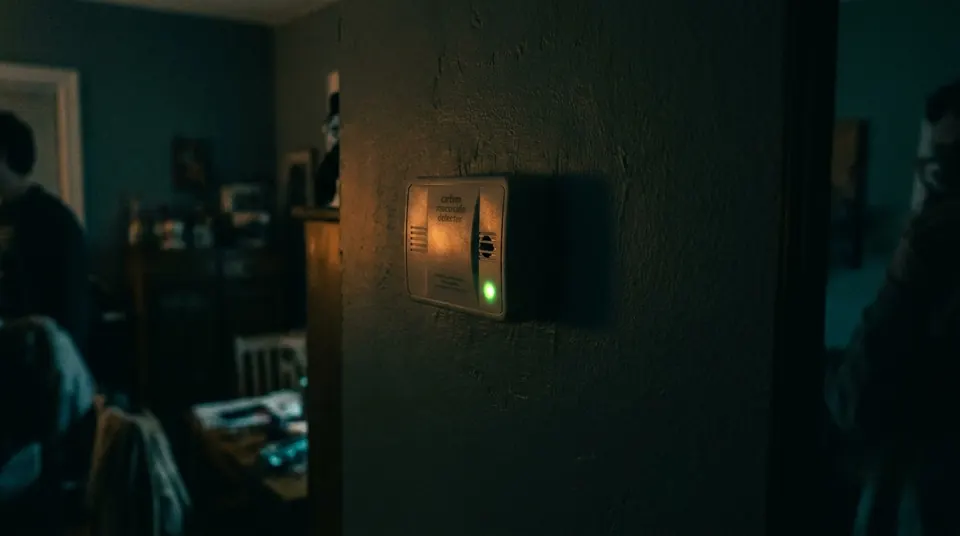
- Put a CO alarm in place first. CPSC advises battery-operated or battery-backup alarms on every level and outside sleeping areas, ideally interconnected. The CDC says to replace them according to the manufacturer, about every 5 years.
- Provide the ventilation the manual states. That usually means a defined opening to outdoors or a large connected volume of air. The manual sets the number, not a rule of thumb.
- Keep 3 feet (0.9 m) clear on all sides. CPSC says the same: at least 3 feet from beds, clothes, curtains, papers and sofas.
- Set it on a level, stable surface. The tip-over switch is a backup, not a plan.
- Never refuel while it runs or is hot. CPSC advises turning it off and letting it cool first.
- Do not sleep with it running in a small enclosed space. CPSC says fuel-burning heaters should not be used while sleeping in tents, campers or other vehicles. A heater is also not something to leave running unattended in a confined space.
- Know the alarm drill. If an alarm sounds, get outside and call 911. CPSC says never ignore it.
Altitude deserves attention. Thinner air means less oxygen per breath for you and for the flame. Mr. Heater lists a 7,000-foot maximum for the Big Buddy, and its manuals warn that people at high altitude are more affected by CO. Smaller models may differ, so check yours.
Note: If a heater trips its oxygen shutoff repeatedly, do not relight it and move on. Repeated shutoffs mean the room has too little air or the burner is faulty. Stop using it and fix the cause.
Kerosene heaters indoors
Kerosene heaters are a separate problem, and local rules differ. Massachusetts, for one, bans the sale and use of unvented kerosene heaters, according to fire-safety guidance built on NFPA material (Fire Engineering). Check with your fire marshal or local code office.
If they are legal where you live, the common safety points from that guidance are:
- Use only K-1 kerosene. Never gasoline or camp-stove fuel.
- Keep the room ventilated, because an unvented kerosene heater in a small closed room can cause CO poisoning.
- Set the wick as the manual says. Flare-ups cause most kerosene heater fires.
- Fill outdoors, after the heater cools.
There is no kerosene equivalent of the propane ODS standard that CPSC publicizes. That gap matters. A propane heater with a sensor has a built-in oxygen check. A wick heater may not, which makes a working CO alarm even more important.
Fire is a bigger everyday risk than CO
CO draws the headlines, but ordinary fire also comes from heaters. NFPA-based guidance says supplemental heating equipment is a leading cause of home fires from December through February, and portable kerosene heaters carry the highest fire-death risk by most measures (Fire Engineering). That data is dated, so use the pattern, not the percentages.
The cure is boring. Distance, stable footing, someone awake in the room, and turning it off when you leave.
Myths we checked
“I’ll just crack a window”
A window helps only if the heater’s design calls for outside air and the opening is big enough. For a heater with no ODS it does nothing to make the device legal for indoor use. CPSC says open doors or windows are not enough for generators, and the same logic applies to any big combustion source in a closed building. Use the manual’s ventilation spec. Add the alarm.
“I’d smell it”
You will not smell carbon monoxide, and its early carbon monoxide poisoning symptoms feel like the flu. Mr. Heater’s manuals call it odorless and poisonous. If you smell propane, treat it as a leak: shut off the gas, get everyone out, and call the gas supplier or 911 from outside. That smell tells you nothing about whether CO is building.
Lab verdict
Use a propane heater indoors only if all four of these are true: it is labelled for indoor use, it has an oxygen depletion sensor and tip-over shutoff, you follow the manual’s ventilation and clearance rules, and a CO alarm is working in the sleeping area. If any one is missing, it is an outdoor heater.
For real cold, a heater is one part of the plan. Insulation, a small warm room and dry clothes cut how much fuel you burn. See how the body loses heat in how long you can survive in the cold, and which gear is worth owning in survival gear that actually matters.
Frequently asked questions
Can you use a Mr. Heater Buddy indoors?
Models sold as indoor safe, with an oxygen depletion sensor and tip-over shutoff, are designed for enclosed spaces, within the size and altitude limits in the manual. Use a CO alarm, keep clearances, and follow the ventilation rules. Not every Mr. Heater product is rated for indoor use, so check the label on yours.
Is it safe to sleep with a propane heater on?
CPSC says fuel-burning heaters should not be used while sleeping in enclosed spaces like tents, campers and other vehicles. Even a rated heater should not run unattended in a confined space. Use warm bedding and insulation overnight and warm the room beforehand.
Can a propane heater cause carbon monoxide poisoning?
Yes. A propane heater makes CO when combustion is incomplete, such as when oxygen runs low or the burner is dirty. Indoor-rated heaters reduce the risk but do not remove it. Keep a CO alarm near sleeping areas.
Is it safe to use a kerosene heater indoors?
It depends on local law and the heater. Some places restrict or ban unvented kerosene heaters. Where allowed, use only K-1 kerosene, ventilate the room, fill outdoors, and keep a CO alarm running.
What do I do if my CO alarm goes off?
Get everyone outside into fresh air immediately and call 911. CPSC says never ignore an alarm. Do not go back in to find the source. Let responders check the building first.
Sources
- CDC: About Carbon Monoxide Poisoning
- CDC/NIOSH: Carbon monoxide IDLH documentation
- CPSC: Carbon Monoxide Information Center
- CPSC: 2026 winter storm safety tips on CO and fires
- CPSC: Oxygen depletion sensor heaters (2002 release)
- Mr. Heater: Big Buddy Portable Heater
- StatPearls: Carbon Monoxide Poisoning
- USDA Forest Service: Carbon monoxide exposure
- Fire Engineering: NFPA heating guidance
General information, not medical or professional advice. In a real emergency, follow instructions from officials and call 911. Disclaimer.